
Tuesday, November 29, 2011
Current Event 7
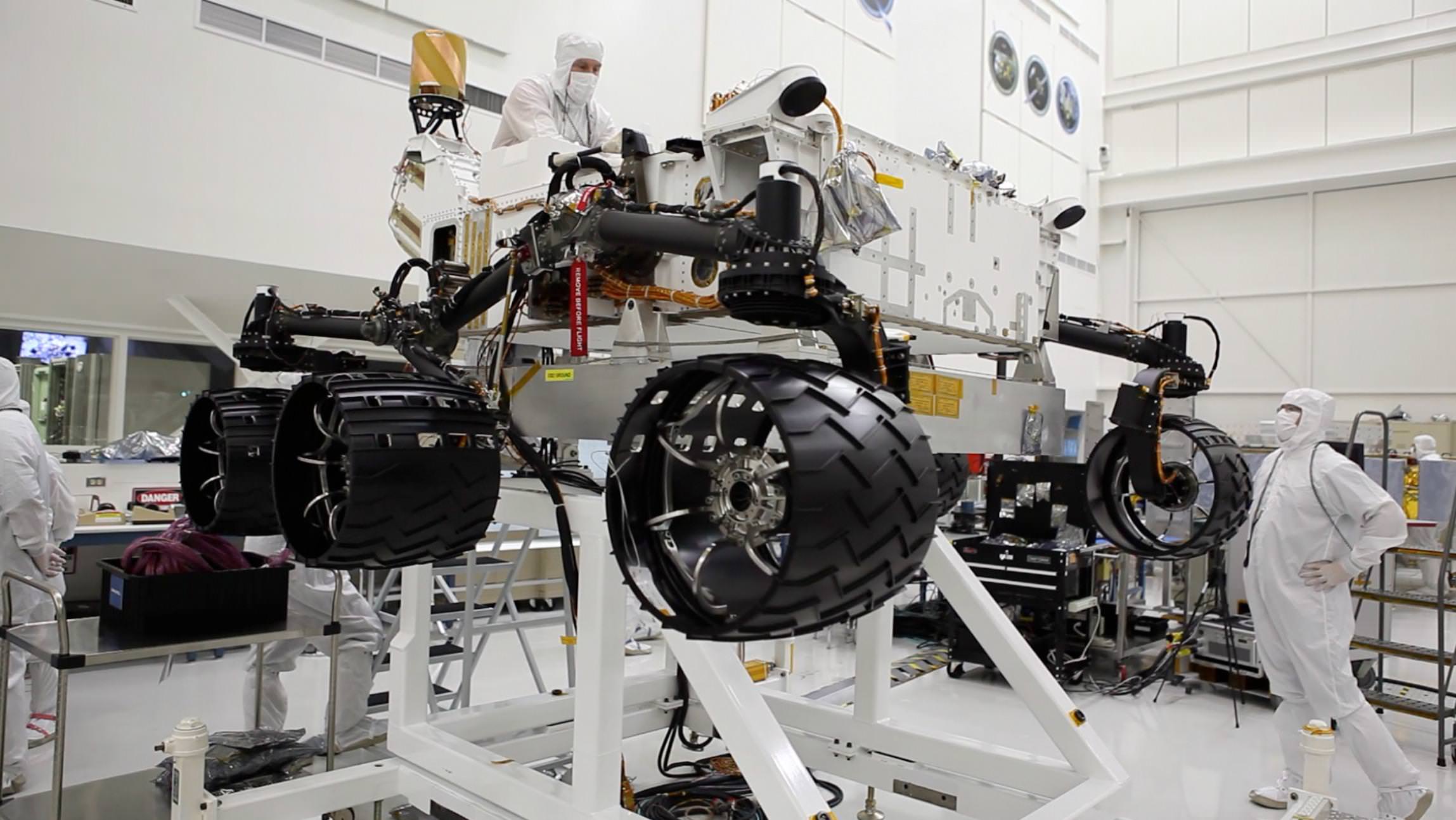
On the 26th of November NASA launched its most advanced Rover to Mars. The launch time was 10:02 EST, at the Cape Canaveral Air force station. The car-sized rover is equipped with the latest and most advance technology, it is named Curiosity. It is designed to thoroughly investigate mars and send information back to its home base. The rocket, which flew it to mars, has new precision landing technology; the rover is expected to land on August 6th 2012 near the Gale crater. Curiosity has two robotic arms, allowing it to do science in real time, in a way its never been done before. It will have a two year prime mission, which is to collect information about the surface of planet Mars. One of the key differences when compared to earlier rovers is its ambitious science goals. It will use a drill and scoop, at the end of its robotic arm, to gather soil and powered samples of rocks, then it will categories the things it found into different lab test tubes and pockets. Curiosity carries 10 science instruments, with a total mass 15 times greater than that on the Spirit rover. Some of the tools are a first of its kind, laser-firing instruments for checking elemental compositions for rocks that are far away.
I am really amazed by the potential of this new rover; it could open a entirely new world to us. With its better driving capabilities, and more advance technology it will show us Mars from a perspective we have never seen it before. If the mission is successful it will bring back very valuable information which could hint us about possible forms of life on Mars and its origins.


Current event 6

Friday, November 25, 2011
Batteries that last
Better Batteries: New Technology Improves Both Energy Capacity and Charge Rate in Rechargeable Batteries
A team of scientists are working on a new type of battery, just like the one found in all of your gadgets, except it has a 10 times longer life and chare ten times faster. The battery should last for more than a week and charge for about 15 minute. The battery is going to be lithium –ion, they last much longer than regular ones. They charge through a lithium reaction, where ions are sent from one side of the battery to the other. Even after 150 charges the battery is five times more effective than a pair of batteries that are sold today. This battery should go onto the market in around 4 year. I found this article at science daily, where all articles are written by scientist this is how I know its validity because I found it on science daily where all articles are written by scientist. This new discovery amazed me, because regular gadget bateri
I was amazed, by this new discovery, because the batteries we used for cellphones and iPods last shortly and in long recharging hours, this new invention will really improve the technological advancement of the world, and short battery life will never be a problem again. The title of this article intrigued me, because I wanted to know more about batter life, and how it can be improved. I was positively surprised when I heard that battery life will soon be ten time longer than it used to be. I found this article interesting, and I would recommend it to anyone who wants to know what batteries will be like in the future, 3-5 years from now.
Northwestern University. "Better batteries: New technology improves both energy capacity and charge rate in rechargeable batteries." ScienceDaily, 14 Nov. 2011. Web. 20 Nov. 2011.
A team of scientists are working on a new type of battery, just like the one found in all of your gadgets, except it has a 10 times longer life and chare ten times faster. The battery should last for more than a week and charge for about 15 minute. The battery is going to be lithium –ion, they last much longer than regular ones. They charge through a lithium reaction, where ions are sent from one side of the battery to the other. Even after 150 charges the battery is five times more effective than a pair of batteries that are sold today. This battery should go onto the market in around 4 year. I found this article at science daily, where all articles are written by scientist this is how I know its validity because I found it on science daily where all articles are written by scientist. This new discovery amazed me, because regular gadget bateri
I was amazed, by this new discovery, because the batteries we used for cellphones and iPods last shortly and in long recharging hours, this new invention will really improve the technological advancement of the world, and short battery life will never be a problem again. The title of this article intrigued me, because I wanted to know more about batter life, and how it can be improved. I was positively surprised when I heard that battery life will soon be ten time longer than it used to be. I found this article interesting, and I would recommend it to anyone who wants to know what batteries will be like in the future, 3-5 years from now.
Northwestern University. "Better batteries: New technology improves both energy capacity and charge rate in rechargeable batteries." ScienceDaily, 14 Nov. 2011. Web. 20 Nov. 2011.
Friday, November 18, 2011
Videos
Videos
http://www.youtube.com/watch?v=hVK9Om4wzBM
In this video Bromine reacts with alcohol. After a while Bromine slowly turns read and then the whole jar turns red, all the contents of the jar start expanding and turning red. It's stays red for a couple seconds and then goes back to the former state.
http://www.youtube.com/watch?v=8ypUVpwgcAA&feature=related
In this example, Lithium ignites in water and burns a couple seconds. Then it stops all of a sudden after burning for a couple seconds.
http://www.youtube.com/watch?v=896vJj6eWYw&feature=related
When you add cesium to water, sparks come out and the reaction lasts for a couple seconds, then the reaction stops and smoke comes out for a couple for seconds then the reaction totally stops and calms down.
http://www.youtube.com/watch?v=qRmNPKVEGeQ&NR=1
The potassium sets on fire and spins around the bowl of water for a couple seconds then it ignites even further and becomes bigger, then all of a sudden it stops and then it just stops and sinks.
http://www.youtube.com/watch?v=vJslbQiYrYY&NR=1
When sodium and potassium are mixed together an explosion is created and it's a pretty high explosion, looks like a firework.
http://www.youtube.com/watch?v=w2mj-Sq2oeo&feature=related
When nitrogen is put into a swimming pool smoke/fog spreads throughout and the whole pool, then fog lifts up and spreads throughout. after a couple seconds the fog moves to one side of the pool and slowly disappears.
http://www.youtube.com/watch?v=5n7kBkBcXgo&NR=1
The aluminum foil, takes a while to react but then the reaction, heats up and foam starts coming out, it overflows and foam is coming out through all sides, this reaction lasts for a couple minutes and then calms down and settles down, and eventually stops.
http://www.youtube.com/watch?v=_Pk6s1MbszA&feature=related
When oxidation is added to a normal gummy bear it ignites and starts, burning the flames are coming off from all sides, when the gummy bear is all burned up, and there's no air for the fire to feed on it eventually turns off.
http://www.youtube.com/watch?v=zrNA8-eipGE&feature=related
The water starts swirling after all the ingredients and reactants are put in, it take a couple seconds for the reaction, to start and then it starts and lasts for a couple seconds until it stops, this was a chemical reaction between all the reactants, but there was also a physical change in appearance of the mixture after.
http://www.youtube.com/watch?v=hVK9Om4wzBM
In this video Bromine reacts with alcohol. After a while Bromine slowly turns read and then the whole jar turns red, all the contents of the jar start expanding and turning red. It's stays red for a couple seconds and then goes back to the former state.
http://www.youtube.com/watch?v=8ypUVpwgcAA&feature=related
In this example, Lithium ignites in water and burns a couple seconds. Then it stops all of a sudden after burning for a couple seconds.
http://www.youtube.com/watch?v=896vJj6eWYw&feature=related
When you add cesium to water, sparks come out and the reaction lasts for a couple seconds, then the reaction stops and smoke comes out for a couple for seconds then the reaction totally stops and calms down.
http://www.youtube.com/watch?v=qRmNPKVEGeQ&NR=1
The potassium sets on fire and spins around the bowl of water for a couple seconds then it ignites even further and becomes bigger, then all of a sudden it stops and then it just stops and sinks.
http://www.youtube.com/watch?v=vJslbQiYrYY&NR=1
When sodium and potassium are mixed together an explosion is created and it's a pretty high explosion, looks like a firework.
http://www.youtube.com/watch?v=w2mj-Sq2oeo&feature=related
When nitrogen is put into a swimming pool smoke/fog spreads throughout and the whole pool, then fog lifts up and spreads throughout. after a couple seconds the fog moves to one side of the pool and slowly disappears.
http://www.youtube.com/watch?v=5n7kBkBcXgo&NR=1
The aluminum foil, takes a while to react but then the reaction, heats up and foam starts coming out, it overflows and foam is coming out through all sides, this reaction lasts for a couple minutes and then calms down and settles down, and eventually stops.
http://www.youtube.com/watch?v=_Pk6s1MbszA&feature=related
When oxidation is added to a normal gummy bear it ignites and starts, burning the flames are coming off from all sides, when the gummy bear is all burned up, and there's no air for the fire to feed on it eventually turns off.
http://www.youtube.com/watch?v=zrNA8-eipGE&feature=related
The water starts swirling after all the ingredients and reactants are put in, it take a couple seconds for the reaction, to start and then it starts and lasts for a couple seconds until it stops, this was a chemical reaction between all the reactants, but there was also a physical change in appearance of the mixture after.
Lab
Title of the Lab: Where's the Evidence?
Guiding question: What are some signs that a chemical reaction has taken place?
Hypothesis:
Notebook
Zinc CuSo4
Pencil
HCI
Aluminum foil
Baking soda
CaCL
Starch
Vinegar
Na2Co3
Iodine
Sugar
Analysis of your results.
Most of our predictions were correct, the most often change was color change and bubbling up. We considered our reaction over as soon as the change stop happening, we would still wait a while to see if anything happened. But for most of the time it was over when the change stopped taking place. For all of the mixtures a change took place, the only chemical change was the fact that the chemicals are mixing, otherwise there were much more physical changes. The Chemicals we mixed we mixed never stayed the same after the after the reaction.
Conclusion :
Our hypothesis was correct, we stated that there was a physical difference, and there was, non of the products/mixtures stayed the same after the reaction, they all changed and looked differently, color and physical change happened. We learned that new substances are formed because there was a physical change from the outside, which made it look different but also a chemical change, because both the objects mixed and there for their chemicals mixed to form a new substance. The reactions did come to an end which we learned. The reaction came to an end, at the moment when they mixed and something started changing in their physical appearance as soon as movement and difference stopped happening in the test tube the reaction was over and that was a new substance.
Further Inquiry: Think about this experiment and the data you collected. Would you make any changes to the method/procedure? Do you have any further questions?
I think this experiment was quite successful and I wouldn’t change a lot. The only thing I would change was leaving the mixtures for longer periods of time a day or two and see is there any changes. The only question I have do they ever come calm down, if the experiments bubbling does it ever stop
Guiding question: What are some signs that a chemical reaction has taken place?
Hypothesis:
Notebook
Zinc CuSo4
Pencil
HCI
Aluminum foil
Baking soda
CaCL
Starch
Vinegar
Na2Co3
Iodine
Sugar
Analysis of your results.
Most of our predictions were correct, the most often change was color change and bubbling up. We considered our reaction over as soon as the change stop happening, we would still wait a while to see if anything happened. But for most of the time it was over when the change stopped taking place. For all of the mixtures a change took place, the only chemical change was the fact that the chemicals are mixing, otherwise there were much more physical changes. The Chemicals we mixed we mixed never stayed the same after the after the reaction.
Conclusion :
Our hypothesis was correct, we stated that there was a physical difference, and there was, non of the products/mixtures stayed the same after the reaction, they all changed and looked differently, color and physical change happened. We learned that new substances are formed because there was a physical change from the outside, which made it look different but also a chemical change, because both the objects mixed and there for their chemicals mixed to form a new substance. The reactions did come to an end which we learned. The reaction came to an end, at the moment when they mixed and something started changing in their physical appearance as soon as movement and difference stopped happening in the test tube the reaction was over and that was a new substance.
Further Inquiry: Think about this experiment and the data you collected. Would you make any changes to the method/procedure? Do you have any further questions?
I think this experiment was quite successful and I wouldn’t change a lot. The only thing I would change was leaving the mixtures for longer periods of time a day or two and see is there any changes. The only question I have do they ever come calm down, if the experiments bubbling does it ever stop
Tuesday, November 1, 2011
Current event
Asteroid 21 Lutetia is not a nother asteroid. Scientist believe that it is a left over planetart seed. Lutetia and its fellow asteroids are thought to be relics form a early solar system, rocky fossils that have recoreded history of the solar systems early days in the pits and fractures. Last july, the European Space Agency’s Rocetta spacecraft flew within 3,200 kilometers of Lutetia.
Scientists estimate that Lutetia is 121 kilometers long, 101 kilometers tall and 75 kilometers wide. Data suggests that it was know as a so called enstatite chondrite- a form of asteroids that is verry rare. It makes up 2 percent of the meteorites that have fallen to earth. The scientitst think that this kind of meteorite is the starting composition of the terrestrial planets. One of the key things that gives its identity away is the asteroids abnormal high density. At 3.4 grams per cubic centimeter, Lutetia is denser than most asteroids measured and comparable density to the giant asteroid Vestra. A density that high suggests that the asteroid is not a rubble pile or a collection of fragments produced by violent collisions. Rather a rocky body has probably maintained its primordial state, and might have differentiated interior, with a metallic core, mantle and surface that never melted. Indeed, Lutetia’s ancient and complex surfaces marked by landslides, enormous craters anf faults and fractures. This supports the finding that the asteroid is primitive and undisturbed and suggests that it formed within the solar systems first 3 million years.Even though there is is evidence supporting the the theory abouut Lutetia being part of a planet, there is not enough evidence to come to a complete judgment.
Tuesday, October 25, 2011
Beryllium Bonding
These are the two beryllium bonds that I found
BeCu: Beryllium copper. Found in springs and other objects that must retain their shape after a period of stress and strain. There are safety concerns about this alloy because it is slightly toxic as are all beryllium compounds.
BeO: Beryllium oxide or Beryllia. Beryllia is used in rocket engines and is used in high performance semiconductor parts, such as radio equipment because of its good thermal conductivity while also being a good electric insulator.
Subscribe to:
Posts (Atom)